
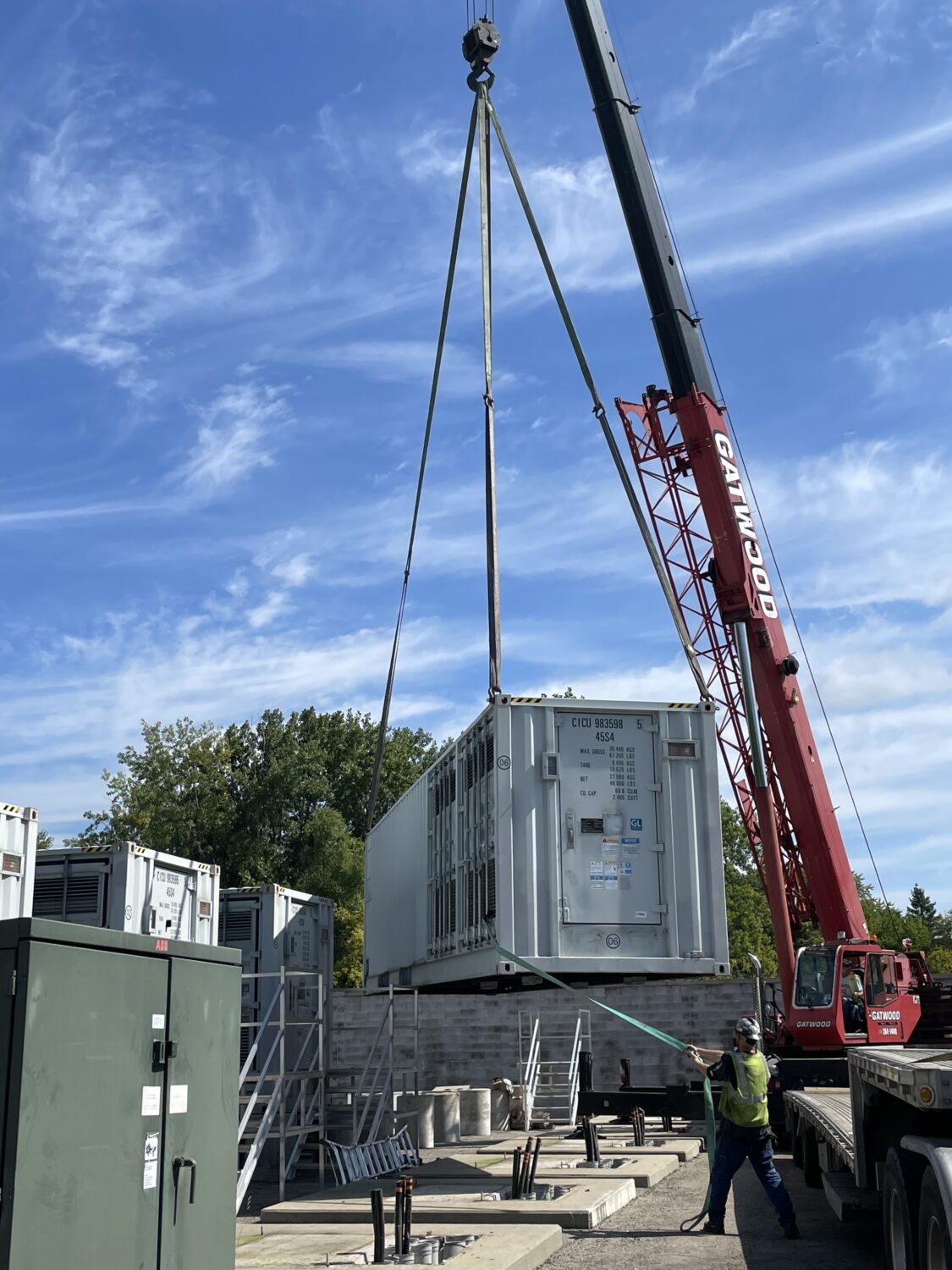
A battery energy storage system (BESS) decommissioning plan should define what will be removed, who is responsible, how hazards and regulatory requirements will be managed, and what evidence will demonstrate completion. It should connect the work on site with the batteries' downstream destination—not stop at the point where equipment leaves the property.
That matters whether a system has reached its finite cycle life, no longer supports a viable revenue model, contains obsolete components, or has experienced an incident. Each situation changes the scope, risk profile, and decisions needed before removal begins.
For owners and operators, the plan establishes a workable path from retirement decision to closeout. For EPCs and general contractors combining an old system's removal with a new installation, it also defines the interfaces between decommissioning and construction.
1. Define the retirement scope and the site's end state
Start with the reason for retirement and the desired outcome. Is the entire system being removed, or only selected batteries and supporting equipment? Will the site be restored, repowered, or handed over for a new build?
Build an inventory of batteries, racks, containers, inverters, transformers, switchgear, cabling, foundations, and other equipment. Record battery chemistry, quantities, weights, condition, and equipment documentation. Identify what stays, what goes, and what needs further assessment before a disposition decision.
Review lease obligations, permits, landowner agreements, and applicable authority requirements. A removal scope that assumes every foundation will stay is materially different from one requiring full civil restoration. The plan should make those assumptions explicit.
2. Assign responsibilities before work starts
A division-of-responsibility matrix should identify the owner/operator, EPC or general contractor, decommissioning specialist, transporter, and receiving facility. Assign responsibilities for approvals, electrical isolation, removal, staging, packaging, shipment arrangements, downstream acceptance, and closeout records.
Distinguish contractual tasks from regulatory duties. Hiring a contractor does not automatically eliminate an owner's obligations. In the United States, the owner/operator may be the waste generator; the determination depends on the facts and applicable rules. The plan should identify the responsible parties rather than assume the OEM or recycler takes care of everything.
For combined replacement projects, also identify who controls access, outages, shared work areas, and the handover to construction. Agree on the condition of the work area that constitutes an accepted handover.
3. Map applicable requirements to the actual material and location
The compliance section should address the jurisdictions involved, battery condition, intended disposition, and quantities expected on site. Waste classification and transportation classification are related planning questions, but they are not interchangeable.
Determine which permits, registrations, identification numbers, training, accumulation controls, shipping documents, and retention requirements apply. Name the person responsible for verifying them and documenting the result before execution.
Do not assume that an intact battery and an incident-damaged battery can follow the same handling or shipping route. Likewise, do not assume that a proposed reuse route automatically removes waste-management obligations. Verify the actual pathway, condition, and applicable rules with qualified specialists and relevant authorities.
Canadian projects need a location-specific review of applicable federal, provincial, and local requirements. A US compliance checklist is not a substitute.
4. Establish a site-specific safety and execution approach
The plan should identify electrical, mechanical, lifting, fire, and environmental hazards, alongside controls, qualified personnel, emergency arrangements, and task-level reviews. Include the approach for shutdown and isolation using applicable procedures and available manufacturer or integrator documentation.
Battery modules can retain stored energy after the system is disconnected. Decommissioning therefore requires more than arranging a utility disconnection or treating containers as ordinary demolition material.
For incident-affected or obsolete systems, document uncertainties and how they will be resolved. Missing equipment information, compromised access, or questionable battery condition should trigger specialist assessment and a revised work method—not unsupported assumptions in the scope.
5. Connect removal, staging, packaging, transport, and recycling
Define where removed equipment will be staged, how it will be identified, and how shipment timing will be coordinated with the applicable on-site controls. Identify packaging needs from battery chemistry, condition, dimensions, and the selected transport route.
Confirm that receiving facilities can accept the material before scheduling removal and shipment. Document responsibilities for carrier coordination and the records needed to track equipment from the site to its agreed destination.
Consider repair, reuse, or repurposing only where supported by a credible assessment and an appropriate destination. Recycling should be planned as part of the project, not treated as a destination to find after trucks are loaded. An anticipated recovery value should not be assumed to offset removal and recycling costs without a supported commercial basis.
6. Build a realistic budget and coordinated schedule
A useful estimate covers labor, equipment, packaging, transportation, recycling or other accepted disposition, permitting, project management, restoration, and documentation. State the assumptions behind it, including battery condition, access, weight, removal method, and downstream acceptance.
Allow for unresolved scope and condition risks rather than presenting a generic cost per MWh as a site-specific quote. Logistics and recycling economics vary by chemistry, location, form factor, and available receiving capacity.
The schedule should link readiness milestones: approved work methods, applicable permissions, trained personnel, packaging availability, receiving-facility acceptance, removal, shipments, restoration, and closeout. In a repowering project, align those milestones with construction without allowing the new-build deadline to obscure decommissioning prerequisites.
7. Define restoration and the closeout package
Specify the required treatment of pads, foundations, conduits, roads, fencing, disturbed soil, and drainage. Restoration should follow the agreed end state and applicable requirements; it may differ when the site is being reused for a replacement system.
Agree on the evidence needed to close the work. Depending on the project, that may include inventories, shipment documents, receiving or recycling records, daily activity reports, photographs, applicable disposition certificates, and a documented site handover. Set the record owner and retention requirements at the planning stage.
A practical readiness check
Before mobilization, ask: Is the scope agreed? Are responsibilities assigned? Have applicable requirements been verified? Are the safety approach and logistics pathway ready? Is the receiving destination confirmed? Are budget assumptions and handover criteria documented?
Any unanswered question is a planning gap to resolve—not proof that the project cannot proceed. Addressing those gaps early helps teams avoid unnecessary handling, disconnected scopes, and uncertainty at closeout.
How Renewance can help
Renewance supports battery end-of-life planning and turnkey decommissioning and recycling execution. Its published white papers describe coordinated removal, packaging, reverse logistics, recycling, compliance guidance, and recordkeeping.
Owners and operators can engage Renewance to help translate retirement decisions into a defined project scope. EPCs and general contractors can engage Renewance as a specialist subcontractor for the battery decommissioning scope within a combined removal-and-replacement project.
Planning a battery storage retirement or repowering project? Contact Renewance to discuss the system, site constraints, battery condition, and intended end state.
Requirements vary by project and jurisdiction and may change. This article provides planning guidance, not legal advice or a substitute for site-specific engineering, safety, or regulatory review.