
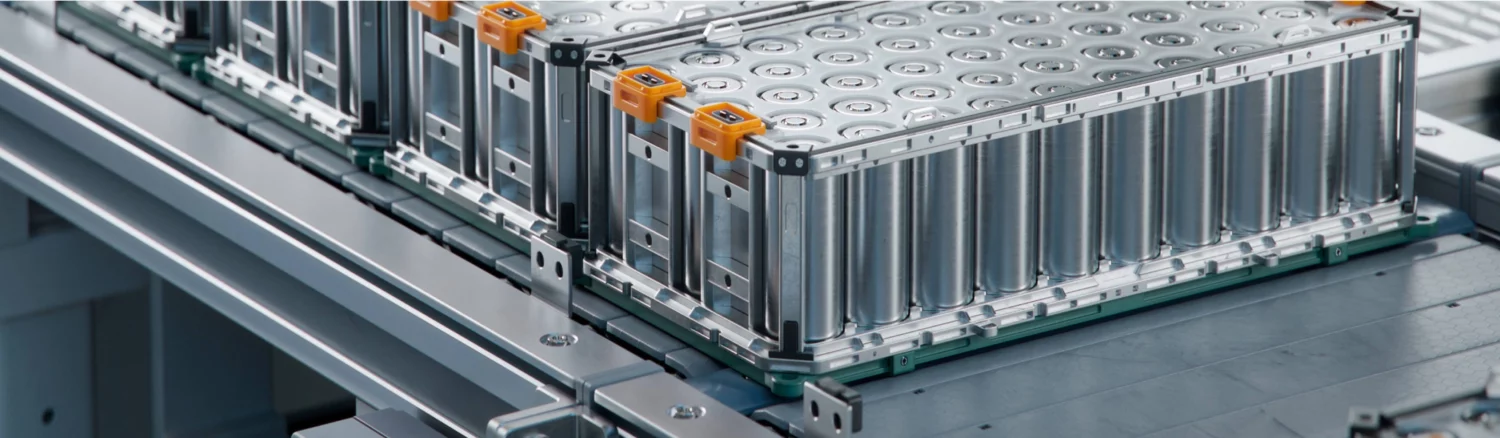
Knowing the proper way to store batteries helps protect people, equipment, and the value of battery assets. Proper storage also supports battery performance throughout the equipment's life. But what is the best way to store batteries? The answer depends on the battery's chemistry, condition, size, and intended use. Lithium-ion batteries used in electric vehicles (EVs), industrial equipment, and battery energy storage systems (BESS) need careful planning. Renewance helps battery manufacturers and EV businesses manage these assets through lifecycle services, software, and responsible battery stewardship. These practices support safer storage.
On this page
- What Is Battery Storage, and Why Does It Matter?
- What Is the Best Way to Store Lithium-Ion Batteries?
- How Should Industrial Batteries and Battery Energy Storage Systems Be Stored?
- When Should Stored Batteries Be Recycled or Removed From Service?
- How We Support Safe Industrial Battery Storage and Lifecycle Management
- Manage Your Industrial Batteries Safely With Renewance
What Is Battery Storage, and Why Does It Matter?
Battery storage means keeping batteries in suitable conditions while they are not in use, such as when spare EV modules await installation. This differs from an operating BESS, which stores electricity for later use and may charge or discharge each day.
Poor storage conditions can speed up chemical aging, reduce capacity, or create safety risks. One serious concern is thermal runaway, a chain reaction in which a battery cell generates heat faster than it can release it. A damaged or failing cell can trigger this event. Storage plans should start with battery manufacturer instructions and a clear process for handling problems.
What Is the Best Way to Store Lithium-Ion Batteries?
The proper approach combines environmental controls, physical protection, charge management, and routine checks. Specific limits must come from the battery maker and the site's approved procedures.
Store Batteries in a Cool, Dry Environment
A stable environment helps reduce wear during lithium-ion battery storage. High heat can speed up chemical changes inside a cell. Moisture may harm connections or other exposed parts. Keep batteries away from direct sun, water, and sharp temperature swings. A warehouse should have controls suited to the batteries being stored. Do not rely on a single temperature or humidity target for every chemistry or pack design. Follow the original equipment manufacturer's (OEM's) storage specifications.
Protect Batteries From Physical Damage
Crushing, punctures, drops, and exposed terminals can turn a stored battery into a safety concern. Use approved packaging and handling equipment that fits the battery's size and weight. Keep metal objects away from exposed electrical contacts and protect terminals against short circuits. Workers should follow safe lifting and movement procedures for heavy modules. Batteries suspected of damage need separate assessment and controls under an approved response plan. Never return them to ordinary stock without a qualified review.
Maintain the Appropriate State of Charge
State of charge (SoC) describes how much usable energy remains in a battery. Leaving a lithium-ion pack at an unsuitable charge level for a long period can affect its condition. The right level varies by product, chemistry, and storage duration. Record the starting SoC and arrange checks or maintenance when the manufacturer requires them. For large inventories, a service provider can handle this work in a controlled setting. RenewanceCenter™ offers SoC maintenance for industrial battery modules, helping businesses keep spare assets ready for their next use.
Organize and Inspect Stored Battery Inventory
Good records make it easier to find and evaluate batteries. Label assets with a unique ID and track their chemistry, condition, storage date, and charge history. Establish inspection intervals based on OEM guidance and the storage environment. Watch for swelling, leaks, unusual heat, damaged cases, and other changes. If a problem appears, follow the site's response plan and ask qualified personnel to assess the battery. Records also support future planning.
How Should Industrial Batteries and Battery Energy Storage Systems Be Stored?
Large batteries need more planning than a small spare device battery. Their weight, stored energy, shipping requirements, and operating role can affect the controls needed. Facilities should use site-specific safety plans and follow OEM instructions and applicable requirements.
Storage Considerations for EV and Industrial Battery Modules
Spare or inactive EV packs and industrial modules may sit in a warehouse for months before use. They need suitable conditions, safe movement, and planned charge maintenance. Professional warehousing can help operators manage inventory and arrange shipments when replacement parts are needed.
Safety and Monitoring for Battery Energy Storage Systems
An operating BESS has different needs from a disconnected spare module. A BESS battery management system tracks key operating conditions. The installation may depend on cooling, ventilation, alarms, and emergency controls. Qualified teams should review maintenance records and site procedures.
When Should Stored Batteries Be Recycled or Removed From Service?
A battery may need to leave service when it is damaged, fails an inspection, or no longer meets performance needs. Swelling, leaks, and visible case damage call for professional evaluation. Do not assume a battery is safe to ship or recycle in the same way as healthy stock.
After testing, a qualified team may recommend repair, reuse, repurposing, or recycling. Each path depends on the battery's condition and the applicable rules. Renewance offers end-of-life battery services that can cover decommissioning, packaging, logistics, and recycling coordination.
How We Support Safe Industrial Battery Storage and Lifecycle Management
Storage is only one part of industrial battery management. Manufacturers, EV service businesses, fleet operators, and BESS owners also need spare parts and a plan for batteries that reach the end of service. Renewance combines physical services with digital tools to help coordinate that work.
Specialized Battery Warehousing With RenewanceCenter™
RenewanceCenter™ provides specialized battery warehousing, logistics, diagnostics, repair, and SoC maintenance. Our Chicagoland facility supports large inventories of battery modules and spare parts. Trained personnel handle storage and outbound shipments in accordance with relevant requirements and OEM specifications. These services can reduce the burden of keeping replacement batteries organized, maintained, and available when needed. They support businesses without dedicated storage facilities.
Battery Asset Management With RenewanceConnect™
RenewanceConnect™ is a digital platform for industrial battery lifecycle management. It supports asset records, service documentation, compliance planning, and maintenance coordination. For connected operating systems, monitoring features can provide data on battery conditions and performance trends. These records can help teams identify issues, plan maintenance, and make informed decisions about replacement or retirement. Features vary by service.
Manage Your Industrial Batteries Safely With Renewance
So, how should you store batteries? Start with the manufacturer's instructions, protect batteries from heat and damage, maintain the right charge level, and keep reliable records. Industrial operations may also need trained staff, specialized warehousing, and coordinated end-of-life services. We support these needs through lifecycle services and software built for industrial battery assets. Contact Renewance to discuss safe storage and long-term stewardship for your battery inventory.
Related articles
- How to Dispose of Lithium-Ion Batteries Safely and Responsibly
- What Is Battery Recycling?
- The Future of Lithium-Ion Batteries: Innovation, Energy Storage, and Lifecycle Management
Get new articles first: follow Renewance on LinkedIn.