
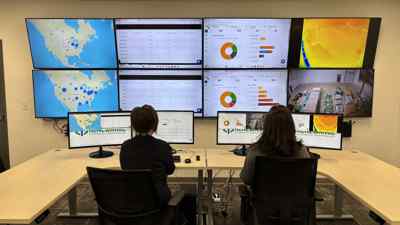
A battery storage dashboard can show an asset as connected without telling an owner whether it is ready to do the job expected of it. An alarm can clear without the underlying problem being understood. And a remote diagnosis can identify a likely cause without giving a field technician enough information to resolve it.
For battery energy storage system (BESS) owners and operators, the useful question is not simply, “Can we see the site?” It is, “Can we turn what we see into an accountable operating decision?”
Remote monitoring should connect data quality, operating context, escalation, and service records. The following questions help owners define that connection. They are a framework for reviewing a monitoring scope—not a claim that every platform or service automatically delivers each function.
1. Catch the difference between a quiet site and missing information
No new alarms does not necessarily mean normal operation. A missing communications path or stale data can leave a dashboard looking uneventful when the monitoring team has lost visibility.
Ask how the service identifies the last valid reading, missing signals, and incomplete coverage. A system-level connection indicator alone may not establish that every relevant subsystem is reporting. The owner should understand which battery, power conversion, and supporting-system signals are actually available through the integration.
A useful review question is: “If data stops updating while the last reading looks normal, how will we know?” Agree how a loss of visibility is reported and who owns restoring it. Treat unknown status as unknown—not as confirmed availability.
2. Catch an output gap without jumping to a battery diagnosis
Lower-than-expected output is a starting point for investigation, not a diagnosis by itself. Interpreting it requires context: what was requested, what operating limits applied, and what the system was permitted to deliver at the time.
Where the necessary signals are available, reviewing requested versus actual power alongside state of charge, equipment status, and applicable operating limits can help narrow the question. Was the system following a constrained command? Was equipment unavailable? Was an operating boundary limiting delivery?
The monitoring scope should say which comparisons are supported. Where command data or relevant limits are unavailable, the report should state that limitation rather than label every output difference as battery underperformance.
This distinction matters commercially. An owner investigating an availability concern needs a defensible explanation before deciding whether the next step belongs with dispatch operations, an equipment provider, or a service team.
3. Catch patterns that an individual alarm does not explain
A temperature reading has more meaning when considered with operating load, ambient conditions where available, and the asset's own history. Similarly, a recurring event may deserve investigation even if it clears between occurrences.
The useful question is not only whether a value crossed a threshold. It is whether the available history helps explain what happened before, during, and after the event. Repeated resets, recurring limits, or a changing trend can justify a closer review without proving a particular root cause.
Ask what history is retained, at what resolution, and whether related signals can be reviewed over the same period. Avoid assuming that every dashboard view provides the records needed for a later investigation.
Thresholds, interpretation, and response must remain equipment- and site-specific. Remote trend review does not replace local protective systems, OEM instructions, or site emergency procedures, and it cannot guarantee advance warning of a safety event.
4. Catch the handoff gap between an alert and an action
An automated notification is not the same as an accepted service task. The monitoring arrangement should make clear who reviews an event, who acknowledges ownership, and what happens when the first contact is unavailable.
Owners should distinguish four responsibilities:
- Receiving and reviewing the alert.
- Deciding whether further remote investigation is appropriate.
- Authorizing any operating change or site visit.
- Carrying out and documenting the approved action.
Those responsibilities may sit with different organizations. Define coverage hours, escalation routes, and any response commitments in the agreement rather than infer them from the words “remote monitoring.”
A useful test is to walk through an event outside normal business hours. Who has the information, authority, and access needed for the next decision? Remote monitoring does not by itself authorize remote control or override local safety requirements.
5. Catch what the field team needs before dispatch
When an issue cannot be resolved remotely, the next step should be more useful than forwarding a screenshot.
Subject to the available data and agreed scope, a service handoff should identify the affected equipment, event timing, relevant trends, troubleshooting already performed, and the reason for the proposed visit. It should also distinguish confirmed observations from working hypotheses.
Site access, work authorization, qualified personnel, and applicable safety procedures still need to be arranged. Remote visibility is not a substitute for those controls.
For the owner, this creates a practical procurement question: does the monitoring service only generate alerts, or does its scope include diagnostic review and coordination with field support? Confirm the boundary before an event forces the issue.
6. Catch an incomplete closeout
An alarm disappearing from the screen is not, by itself, evidence that a fault has been corrected. A useful closeout records what was observed, what action was taken, what evidence supports the outcome, and whether further investigation or follow-up remains open.
This is particularly important where a condition recurs. If each occurrence is treated as a new isolated event, an owner may lose the history needed to recognize an unresolved pattern.
Monitoring data and maintenance records should support each other. Agree how events are linked to service records, who can retrieve the history, and what information the owner receives. Records can support maintenance planning and later warranty review; they do not establish warranty coverage on their own.
What this means for a monitoring scope
Before selecting or reviewing a service, ask for clear answers to these questions:
- Which signals and subsystems are integrated, and how is stale or missing data identified?
- Which operating comparisons can the available data actually support?
- What event history is retained and accessible to the owner?
- Who reviews, acknowledges, escalates, and authorizes action?
- Where does remote diagnosis end and field-service coordination begin?
- What constitutes a documented closeout, and how are recurring events linked?
The objective is not the largest possible dashboard. It is a monitoring arrangement that helps the owner understand what is known, what remains uncertain, and who is responsible for the next step.
Connecting monitoring with lifecycle service
RenewanceConnect™ monitoring brings together operating parameters, alerts, historical information, and remote diagnostics. Renewance's published service description also includes coordination of field technicians where an issue cannot be resolved remotely.
The exact data, integration, service coverage, and response commitments should be confirmed for the equipment, site, and contracted scope. Owners can also review what a BESS long-term service agreement should cover when connecting monitoring responsibilities to a broader maintenance arrangement.
To discuss how monitoring, diagnostic review, and field support could fit your battery portfolio, contact Renewance.
This article provides general owner-side planning guidance. It is not an operating instruction, emergency-response procedure, performance guarantee, or representation of a universal monitoring configuration.