
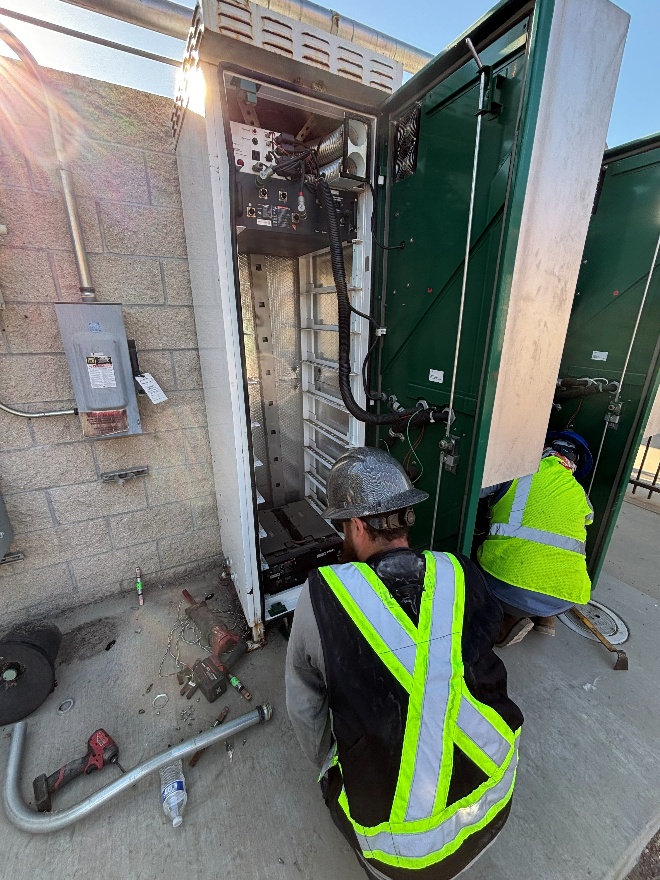
Decommissioning is a project, not just a removal job
A battery energy storage system (BESS) can reach the end of its useful life for several reasons. Batteries may reach their finite cycle life. A system may no longer support a viable revenue model. An incident may damage equipment, or an underperforming installation may depend on obsolete components that are no longer practical to replace.
Whatever triggers retirement, the next step is not simply to disconnect the system and arrange a pickup. BESS decommissioning combines electrical safety, equipment removal, battery handling, regulated transportation, recycling, and site restoration. Each activity needs to fit into a coordinated plan.
For owners and operators, that plan helps make responsibilities, costs, and compliance obligations visible. For engineering, procurement, and construction (EPC) firms and general contractors replacing an existing system, it also defines how the retirement scope connects to the new construction project.
1. Assess the system and define what will be removed
Start with an inventory of the installation. Battery chemistry, module condition, component weights, equipment configuration, and site access all affect the work. An intact system reaching normal end of life requires a different handling plan from one with damaged batteries or incident-related contamination.
The assessment should identify which components are candidates for reuse or recycling and which will remain on site. Batteries, inverters, transformers, switchgear, containers, foundations, and underground infrastructure should not be treated as one undifferentiated removal scope.
- Confirm available equipment records and manufacturer or integrator procedures.
- Identify damaged, defective, or otherwise suspect batteries for specialist assessment.
- Define retained equipment and the boundary between removal and replacement work.
- Review lease terms, permitting conditions, and the required final condition of the site.
Reuse should be an assessed disposition option, not an assumption that every retired battery has a second-life market.
2. Build the safety, compliance, and logistics plan
Before work begins, the project team needs a site-specific plan covering hazards, personnel qualifications, permits, waste management, packaging, transportation, and the receiving facilities. The plan should also establish emergency procedures and task-specific safety controls.
A division-of-responsibility table is especially useful. It assigns responsibilities among the asset owner, EPC or general contractor, decommissioning specialist, transporter, and recycler. Who approves the shutdown? Who manages on-site staging? Who arranges shipping documentation and retains the closeout records? Those questions should be answered before equipment starts moving.
In the United States, battery end-of-life management can involve EPA waste rules, Department of Transportation hazardous materials requirements, Occupational Safety and Health Administration workplace safety requirements, and state and local regulatory obligations. Applicable handling categories, accumulation limits, time limits, identification requirements, and permits depend on the project and jurisdiction. Canadian projects require their own review of applicable federal, provincial, and local requirements.
Owners and operators should not assume that an OEM warranty or a recycling agreement resolves every end-of-life obligation. Under U.S. waste rules, the owner/operator is often the waste generator, but the determination depends on the facts. Engaging a specialist supports proper execution; it should not be treated as automatically transferring or eliminating legal responsibilities.
3. Shut down and isolate the system safely
Shutdown and electrical disconnection should follow the applicable manufacturer or integrator procedures and the site-specific safety plan. Qualified personnel must manage the electrical work, including appropriate energy isolation and lockout/tagout.
A shutdown command does not make every part of a battery installation safe to handle. Battery modules can retain stored energy, and damaged equipment may introduce additional hazards. This stage establishes the conditions for controlled dismantling; it is not a substitute for battery-specific handling precautions.
This article is an overview for project planning, not a field procedure for disconnecting or handling energized equipment.
4. Remove, stage, and package the batteries
Battery modules are removed and moved to a designated staging area using handling methods appropriate to their weight, configuration, and condition. The removal sequence should align with the packaging and shipping plan so material does not accumulate without a clear onward route.
Packaging must address risks such as short circuits and movement-related damage and meet the applicable transportation requirements. Chemistry and condition matter: damaged or defective lithium-ion batteries can require specialized packaging and transport arrangements. They should not automatically enter the same shipping stream as intact batteries.
Planning removal, staging, packaging, and carrier capacity together helps avoid unnecessary handling, congestion, and delays.
5. Coordinate transportation and recycling
Before batteries leave the site, the team should confirm the receiving facility's acceptance requirements and the applicable packaging, marking, labeling, shipping documentation, and personnel training requirements. The destination must be suitable for the chemistry and condition of the batteries being shipped.
Reverse logistics is a major part of the project, not an administrative afterthought. Battery weight, load configuration, distance, packaging needs, and recycler availability influence both the schedule and cost. Planning these activities as one connected scope creates opportunities to reduce avoidable handling and improve cost control.
The project should maintain traceability between the material removed, the shipments dispatched, and the receiving facilities. Recycling or disposition documentation belongs in the closeout package, not in a separate process that is left unresolved after site work ends.
6. Remove the remaining equipment and complete site closeout
The remaining scope may include containers, inverters, transformers, switchgear, and civil infrastructure. Refrigerants and other regulated materials also need appropriate management where present.
Site restoration depends on the landowner agreement, lease, permits, and planned future use. A site being returned to its previous condition may need foundation removal, grading, erosion controls, and revegetation. A repowering project may instead retain selected infrastructure for the replacement system.
Closeout should bring together the equipment inventory, shipment records, recycling or disposal records, applicable certificates, and evidence that the agreed restoration scope is complete. Record retention requirements should be confirmed for the applicable waste category and jurisdiction.
What EPCs and general contractors should include in a replacement RFQ
When retirement and new construction are combined in one request for quotation, decommissioning needs its own defined work package. Treating it as a generic demolition allowance can leave critical interfaces unresolved.
- Scope boundaries: identify equipment to remove, retain, or protect.
- Safety responsibilities: define shutdown, isolation, access, and coordination with other trades.
- Battery disposition: include assessment, staging, packaging, transportation, and recycling responsibilities.
- Schedule interfaces: connect removal milestones to the replacement construction sequence.
- Closeout requirements: specify documentation and the condition in which the site will be handed over.
EPCs and general contractors can subcontract the battery decommissioning scope to Renewance rather than manage specialized battery handling and reverse logistics as a conventional demolition task.
Plan the whole project before pricing the removal
Decommissioning costs extend beyond dismantling labor. Packaging, handling equipment, transportation, recycling, permitting, and site restoration can materially affect the budget. Battery chemistry, condition, weight, and site constraints make a project-specific estimate more useful than a generic cost per system.
Renewance supports owners/operators and project teams with decommissioning planning and turnkey decommissioning and recycling execution. Coordinating the field work, reverse logistics, and documentation helps reduce the management burden while keeping safety, compliance, and cost considerations connected.
Planning a BESS retirement or replacement project? Contact Renewance to discuss your system, site requirements, target timeline, and decommissioning scope.
Regulatory requirements vary by jurisdiction and may change. Confirm project-specific obligations with the relevant authorities and qualified advisors. This article is not legal advice.